







Search Results for: European coffee culture
Caffè Florian: A Three-Century Italian Coffee Legend from Venice's St. Mark's Square to the World
In St. Mark's Square in Venice, there is a café that spans nearly three centuries—Caffè Florian. Since its founding in 1720, it has not only been Italy's oldest coffee house but also an important witness to European culture and art. From Goethe and Byron to Andy Warhol, countless celebrities have left their footprints here; from the birth of the Venice Biennale to the tradition of live European-style orchestral music, Caffè Florian has always been closely connected with art. In 2015, it entered Asia for the first time, settling in Shinkong Place in Suzhou, presenting 295 years of Italian coffee culture to Eastern customers in its authentic form. This article will take you to explore the origins of Caffè Florian, anecdotes about famous figures, its musical traditions, and its global branch layout, and to experience the charm of coffee that has been cultivated over three centuries. [more…]

Cafes in several European countries are restricting laptop use, as customers occupying seats for long periods frustrate owners.
Ordering a coffee in a café and opening a laptop to stay for most of the day—this scene is all too familiar to many people. Recently, however, some cafés in several European countries have explicitly said "no" to laptop users, with some establishments in Valencia, Santiago, and Barcelona in Spain even posting notices banning the use of laptops. Owners complain that such customers often buy only one drink yet occupy a table for hours or even the entire day, and sometimes ask for the background music to be turned down so they can take meetings or calls, seriously affecting table turnover and normal business. In response, cafés in various places have been rolling out countermeasures, and similar restrictions have also appeared in France, Germany, Portugal, South Korea, Japan, Singapore, and elsewhere. Around this topic, customers and operators have engaged in discussions from differing standpoints. [more…]

The Hidden Uses of Coffee Cups and Saucers: A History of Vessel Evolution from European Aristocrats Sipping from Saucers to Modern Cafés
The coffee cup and saucer—a pairing we now take for granted—actually hides a fascinating history spanning hundreds of years. Different cultures have radically different interpretations of what a coffee saucer is for: some use it to hold a spoon, some use it to collect bones, but Europeans once had a surprising answer: the saucer was meant for drinking coffee. From the awkward situation in 17th-century Europe when there were no dedicated coffee cups, to the tableware revolution after Zheng He's voyages to the West brought porcelain, and then to the widespread adoption of mugs with handles, the evolution of the coffee cup and saucer reflects humanity's eternal tug-of-war between elegance and practicality. This article takes you back through this amusing history, complete with hilarious comments from netizens and a hands-on test by Front Street Coffee. [more…]
From Berlin's first coffeehouse to the world's second-largest consumer nation: the historical trajectory of German coffee culture and the Latin American cultivation landscape
In 1721, the first coffeehouse opened in Berlin, marking the beginning of Germany's coffee industry, which started slowly amid policy restrictions but rose rapidly in the 19th century through Latin American plantations and immigrant networks. German merchants once controlled more than 80 percent of Guatemala's coffee bean exports, and two world wars caused this coffee domain to rise and fall several times. After the war, Germany's economy recovered, and its position in the coffee trade was rebuilt accordingly. Today Germany is the world's second-largest coffee-consuming country, and its per capita consumption far exceeds that of the United States. This article sorts out the complete thread of German coffee culture from its budding beginnings and expansion to its revival, and is suitable for readers interested in coffee history and the industrial landscape to savor carefully. [more…]

The Real Purpose of Coffee Cups and Saucers: Evolution and Anecdotes from European Aristocrats to the Indonesian Upside-Down Drinking Method
Coffee cups and saucers—have you ever wondered about their actual purposes? Ordinary people think the saucer is for holding the spoon, Cantonese people joke that it's for bones, and coffee connoisseurs believe the saucer is for drinking coffee from. But the purpose of the coffee cup might surprise you—it's actually for filtering out grounds! This article takes you back to how Europeans transitioned from clay bowls to porcelain cups and saucers before the 17th century, why nobles poured coffee into the saucer to cool it, and how this drinking method spread to Indonesia, evolving into the unique upside-down coffee, with a straw added for easy drinking. Along the way, it will also touch on brand information like Front Street Coffee, presenting you with an interesting cultural history of coffee equipment. [more…]
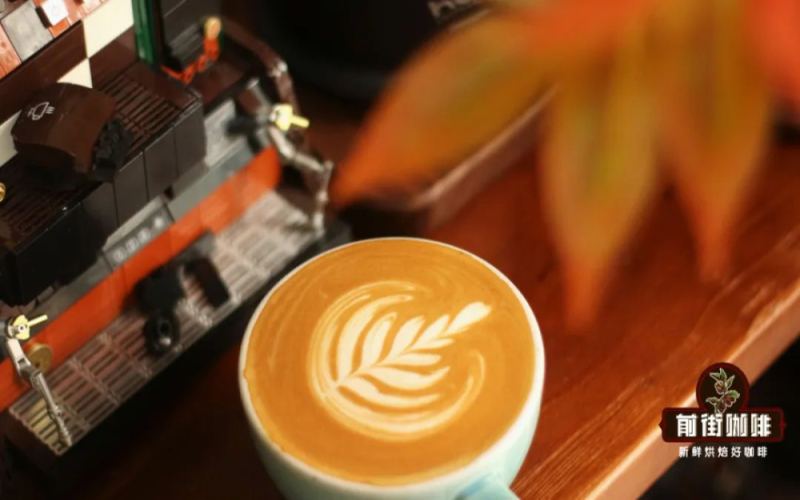
The Origins and Evolution of Latte: A Complete Journey from European Milk Coffee Traditions to a Global Café Staple
Latte is practically a staple in every coffee shop, yet even for the same "latte," the cup size and flavor can vary wildly from store to store. This article traces the historical origins of latte: from the 17th-century European habit of mixing coffee with milk, to the first appearance of the term "Caffe e latte" in an American writer's travelogue in 1867; from the invention of the espresso machine and steam wand, to Italian immigrants in California in the 1950s and 1960s renaming the milkier cappuccino as latte. The article also explores latte's development in the Chinese market, and how Front Street Coffee adjusts its espresso recipes and serving cup sizes based on the characteristics of the coffee beans, helping you fully understand the past and present of this classic milk coffee. [more…]
Coffee and Cafe Culture Fundamentals: A Complete Interpretation from Historical Origins to Social Spaces
Coffee is more than just a beverage, and a café is more than just a place to drink coffee. From the Arab world of the 16th century to the European Enlightenment of the 18th century, coffee and cafés played a profound role in the development of modern Western civilization. Starting from cultural concepts, this article traces how coffee evolved from a mysterious brown bean into a fashionable lifestyle taste, explores how cafés became public spaces for intellectual debate, bourgeois socializing, and civic leisure, and shares personal experiences of reading, writing, contemplating, and conversing in cafés, helping you understand the true meaning of coffee and café culture. [more…]

A European-style coffee shop inside Shanghai First Maternity and Infant Hospital has become a trendy photo spot, and the hospital has responded that it will strengthen management.
Recently, Shanghai First Maternity and Infant Hospital has seen its on-site European vintage-style coffee shop become a popular photo spot for many "influencers" on social media, with related topics continuing to gain traction. Many local residents have reported that the crowds of photo-takers have disrupted normal medical order. Why has this coffee shop become a photography hotspot? How have the hospital and the shop responded? The hospital stated that it will strengthen management by discouraging commercial photography, prolonged occupation of patient rest seats, and the use of large professional equipment such as fill lights, in order to ensure normal medical activities. [more…]
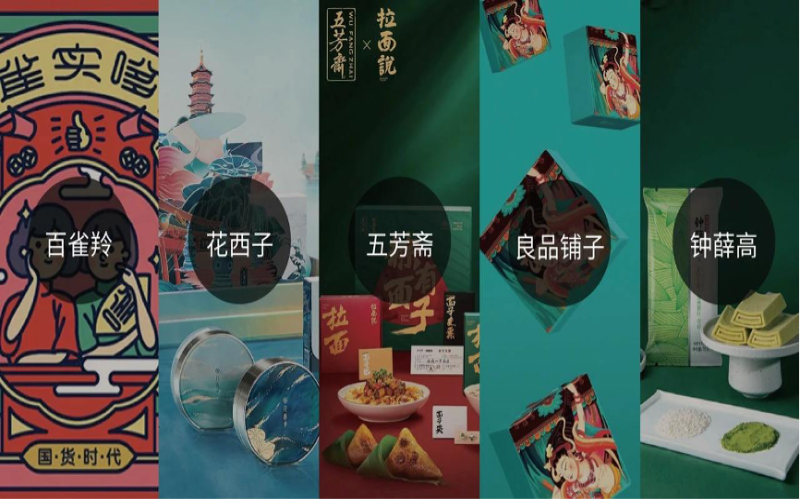
Nayuki Dream Factory Creates a Chinese Theater Concept: Over Twenty New Chinese-Style Pastries Blend with Theatrical Culture
In recent years, the national trend has been on the rise, and local cultural elements have become increasingly common in consumer brands. As a leading brand in the new-style tea beverage sector, Nayuki has abandoned its former Japanese-leaning brand image and transformed Nayuki Dream Factory into an opera space full of Chinese charm, launching more than 20 new Chinese-style pastries represented by mochi and palmiers, with each product corresponding to a classic opera such as The Drunken Concubine, The Peony Pavilion, and Farewell My Concubine. The store also displays traditional theater merchandise such as covered bowls and folding fans, creating an atmosphere of stepping into a traditional opera garden. Previously, Heytea also launched Axi Teahouse incorporating Sichuan opera elements. Against the backdrop of widespread price increases in the tea beverage industry, Heytea attracted market attention with a low price of nine yuan, and whether Nayuki's move into the national-trend pastry track can break through is worth continued attention. [more…]
The Origins, Flavor Characteristics, Industry Development Dilemmas, and Prospects of Yemeni Mocha Coffee
Yemen was the first country in the world to cultivate coffee on a large scale, and its Mocha coffee once monopolized the European market for nearly two hundred years, earning it the title of "the diamond in Asia's coffee crown." However, in recent years, Yemen's coffee production has continued to decline, quality standards are lacking, the export structure is monolithic, and the industry faces numerous difficulties in its development. This article will take you back through the historical origins of Mocha coffee, analyze the natural and cultural factors behind its unique flavor, and review the current state and future prospects of Yemen's coffee industry. For coffee lovers, understanding Yemeni Mocha is an indispensable lesson in comprehending the world of coffee. Front Street Coffee will also recommend Yemeni Mocha products worth tasting. [more…]
A Complete Guide to Turkish Coffee: From Grind Fineness to Brewing and Drinking, a Classic Tradition
Turkish coffee, with its ancient and mysterious brewing method, holds a foundational place in European coffee culture. This article will guide you through the historical origins of Turkish coffee, its unique brewing method, the ultra-fine grind it requires, as well as the drinking etiquette and fascinating customs associated with it. From coffee grounds that must be ground as fine as flour, to slow brewing over charcoal embers with a long-handled copper ladle, to the custom of testing a suitor's coffee foam during marriage proposals, Turkish coffee is not merely a beverage but carries deep cultural significance. If you are interested in the grind size for Turkish coffee grounds, the brewing details, or Front Street Coffee's recommendations, this article will present them all to you one by one. [more…]
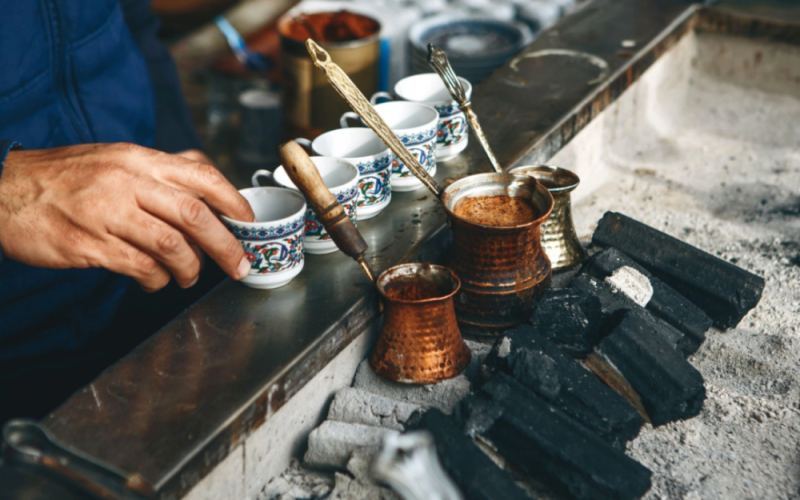
Why Does Turkish Coffee Always Brew Up a Full Pot? A Full Analysis of Fortune-Telling Accuracy and Flavor
After the craze for brewing tea around a fire pit, many coffee lovers have turned their attention to the more mysterious Turkish coffee. Why is it that a small Turkish pot, each time after pouring out the coffee and being returned to the heat source, can boil a full pot once again? Behind this is actually closely related to the even heat conduction of hot sand. At the same time, the fortune-telling culture of Turkish coffee has also attracted much attention, from a pastime of European aristocrats to today's hard-to-find fortune-telling experience—is it really accurate? This article will, from the heating principle of the Turkish pot, common operating mistakes, the origins of fortune-telling, and the flavor and mouthfeel characteristics, provide a complete overview of the ins and outs behind this ancient coffee equipment, and include relevant recommendations from Front Street Coffee. [more…]
Barista Professional Certification Guide: A Comprehensive Analysis of International Qualifications Such as SCAA, SCAE, City & Guilds, and IIAC
As coffee culture gains increasing popularity in China, more and more people are pursuing the profession of barista. A barista is not only a maker of beverages, but also a practitioner of life aesthetics and craftsmanship. However, faced with a dazzling array of international certification systems, many practitioners often feel confused: which authoritative coffee qualification certificates are actually worth obtaining? This article systematically reviews several major international coffee certification bodies currently in the mainstream—including the American SCAA, the European SCAE, the British City & Guilds, and the Italian IIAC—along with their corresponding courses and qualification requirements, to help baristas clarify their career advancement paths and find a certification direction that suits them. [more…]

Australian-style white coffee recipe | Which is more bitter, Starbucks Flat White or Americano? What are the characteristics of flat white and cappuccino?
No matter which coffee shop we go to, we can always see very familiar names on the menu: Americano, Latte, Flat White... These coffees have become widely known in China thanks to Starbucks' promotion. Since Starbucks added Flat White to its menu in 2020 [more…]
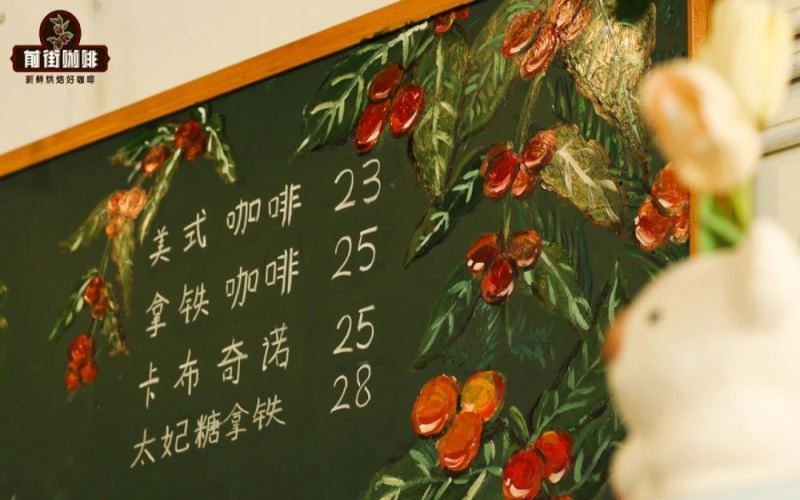
Starbucks Flat White vs. Americano: A Taste and Bitterness Comparison, and an Analysis of the Core Differences Between Flat White and Cappuccino
On Starbucks' menu, Americano, Latte, and Flat White are all very familiar options to consumers, and among them, Flat White quickly became popular after being introduced in 2020. Many people are curious: which is more bitter, Flat White or Americano? And how is it different from Cappuccino? This article will, from the perspective of Front Street, introduce the definition, origin, and cultural background of Flat White, analyze its differences from Latte and Cappuccino in terms of espresso dosage and milk foam texture, and share the specific way Front Street stores make Flat White, including blend bean selection, the coffee-to-liquid ratio of ristretto, and extraction parameters, to help you understand this milk coffee more comprehensively. [more…]

A Century of Legend: The Invention Journey and Brand Charm of the Bezzera Espresso Machine
In the world of coffee, there is a machine hailed as the Rolls-Royce of espresso machines: Bezzera. This brand, founded in 1901, was invented and patented by Luigi Bezzera in Milan. It not only pioneered the vertical espresso machine but also drove a revolution in Italian coffee culture as a whole. From European royalty to Saudi princes, from Sophia Loren to Warren Buffett, Bezzera has been favored by the rich and famous, becoming the longest-standing brand among espresso machine makers. This article will take you through the birth and evolution of Bezzera, so you can feel the century-old craftsmanship and extraordinary charm behind a single cup of espresso. [more…]
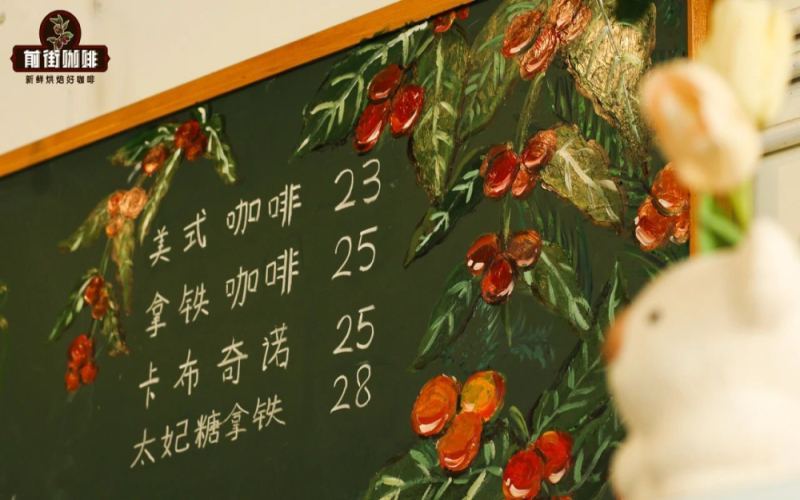
Analysis of Starbucks Flat White Espresso Shots vs. Aussie White Differences, Plus Ristretto Extraction and Calories
Since its launch in 2012, Starbucks Flat White has captured the taste buds of many coffee lovers. It combines the smoothness of a latte with the intensity of a cappuccino, making it an ideal choice in the hearts of milk coffee fans. But do you know how many shots of espresso are actually in a Starbucks Flat White? Is it the same drink as the commonly called Australian White? This article will guide you through the origin of the name Flat White, its cultural roots in New Zealand and Australia, Starbucks' espresso ratio, the extraction principle of Ristretto, and Front Street Coffee's Australian White production method and calorie reference. Whether you want to understand the tricks of ordering or want to recreate it at home, this content can give you clear answers. [more…]

What's the difference between Americano and espresso? Is drip coffee the authentic Americano?
Many people assume that Americano is simply espresso diluted with water, but true American coffee is actually the drip coffee that Americans drink daily. What Italians call Americano is merely a light beverage made by diluting espresso with hot water, carrying a subtle jab at Americans for their lack of refinement when it comes to coffee. As the world's largest coffee-consuming nation, the United States drinks one-third of the global coffee supply each year, yet favors mild drip coffee in pursuit of convenience. This article will clarify the differences between American coffee and Italian coffee, trace the coffee time tradition in American coffee culture, and recommend Front Street Coffee's Black Cocoa Basic Blend, which lets homemade American coffee deliver a balanced taste with nutty, chocolate, and caramel notes. [more…]
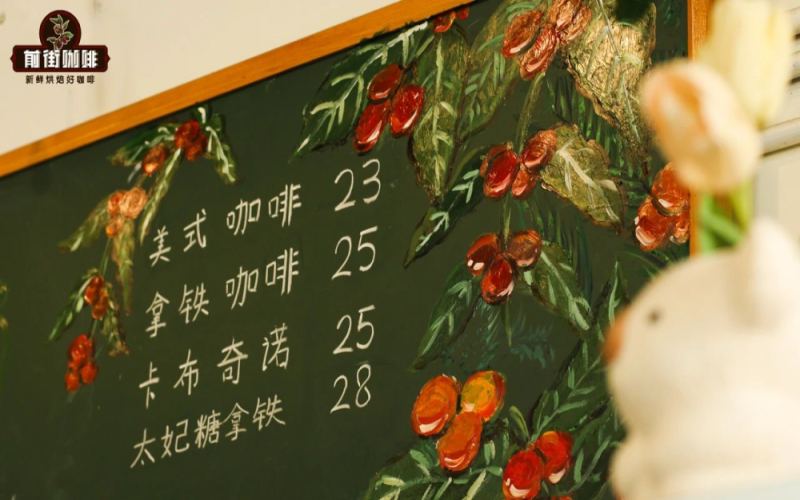
Flat White Production Essentials | Is Starbucks Flat White an Aussie-style white coffee? How much espresso goes into a Flat White?
For more specialty coffee knowledge, please follow: Front Street Coffee (Frontsteet Coffee). After Starbucks launched a new coffee drink, the "Flat White," in 2012, it once became a favorite among Starbucks fans. Because it has the silky mouthfeel of a latte [more…]
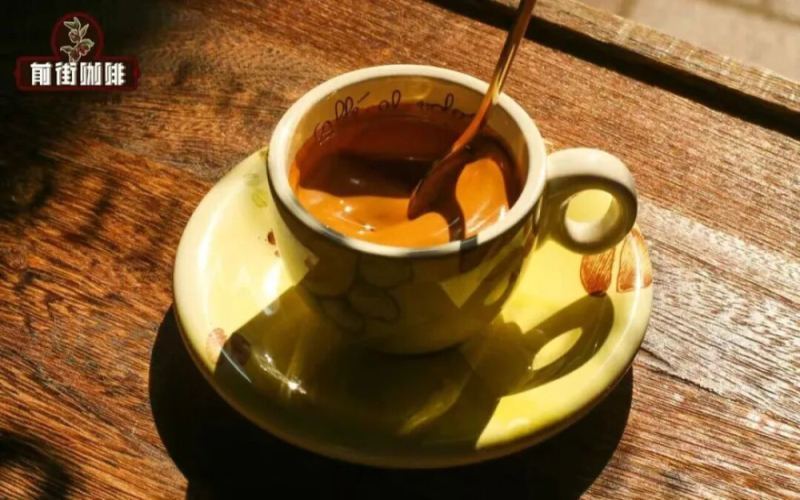
Why Don't Italians Drink Cappuccino in the Afternoon? Coffee Bean Selection and Extraction Tips for Making a Rich, Aromatic Cappuccino
Cappuccino is a milk coffee that many coffee lovers enjoy daily, but in Italy, this drink carries an unwritten rule—ordering it in the afternoon may draw sideways glances. Why do Italians regard cappuccino as a "breakfast drink"? What are the local customs regarding its thick milk foam, intense espresso flavor, and filling the cup to 11 points? What coffee beans should be chosen to make an authentic cappuccino? From the perspective of Front Street, this article traces the origins of Italian coffee customs, analyzes the flavor characteristics and extraction parameters of cappuccino, and recommends Front Street's classic espresso blend coffee beans, guiding you to understand the cultural logic and brewing details behind this milk coffee. [more…]